Conferences & Declaration summary
Conferences & Declaration summary
2010
The 7th United Nations Day of Vesak
(Thailand)
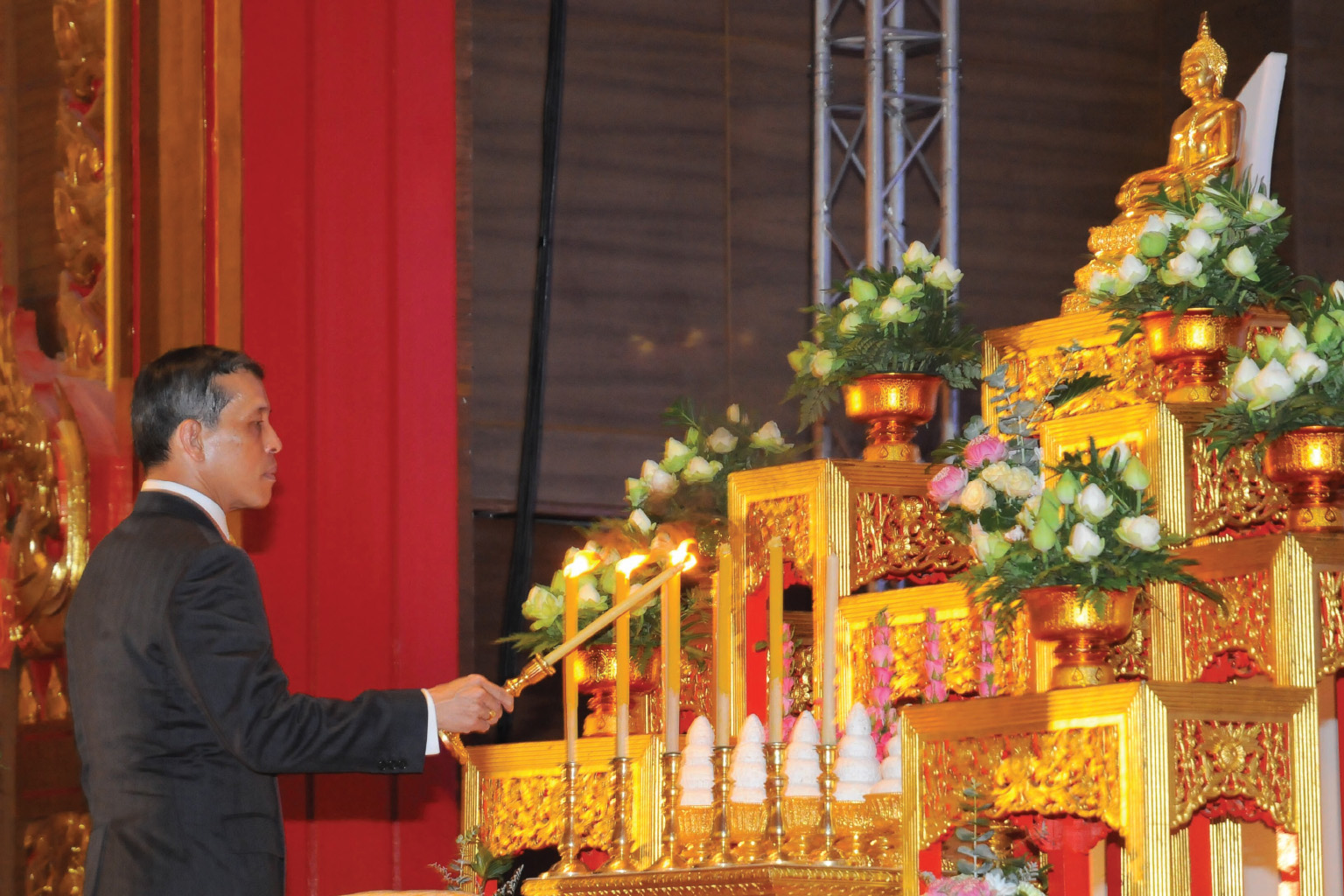 From May 23 to 25, 2010 (B.E. 2553), the 7th United Nations Day of Vesak celebration was held at Mahachulalongkornrajavidyalaya University in Ayutthaya Province, the ESCAP Hall at the United Nations Conference Centre in Bangkok, and Buddhamonthon in Nakhon Pathom, Thailand. The celebration was co-hosted by Maha- chulalongkornrajavidyalaya University and ITRI of Japan, with oversight from the International Council for the Day of Vesak, support from the Thai Government, and blessings from the Supreme Sangha Council. Delegates from 83 countries and regions attended the event.
 This marked the first time the celebration took place at the Conference Hall of Mahachulalongkorn- rajavidyalaya University in Ayutthaya. His Royal Highness Crown Prince Maha Vajiralongkorn (now His Majesty King Maha Vajiralongkorn Phra Vajiraklaochaoyuhua) graciously attended and officially inaugurated the “48 Phansa Maha Vajiralongkorn Conference Hall,” which served as the venue for the opening ceremony. Participants were also blessed by Somdej Phra Maharatchamong- khalachan, Acting Supreme Patriarch of Thailand, who represented the Sangha at the United Nations Conference Centre in Bangkok.
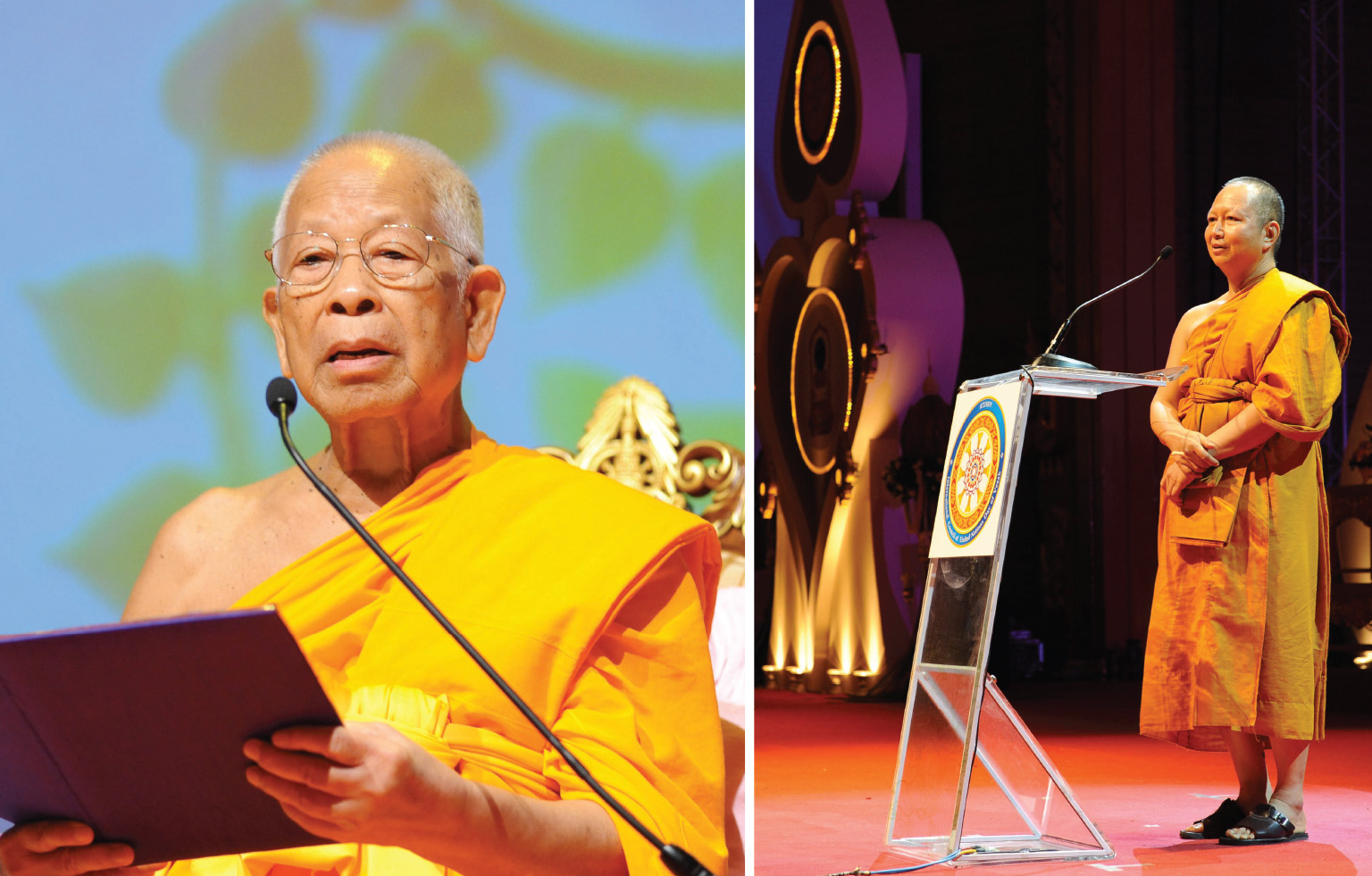
The celebration focused on the theme
“Global Recovery: The Buddhist Perspectives,”
with Dr. A.T. Ariyaratne, Sri Lankan activist and founder/president of the Sarvodaya Shramadana Movement, delivering the keynote address. Panel discussions explored five sub-themes:
- Recovery of World Through Mindfulness Peace
- Recovery of World Through Buddhist Education
- Recovery of World Through Community Existence in Harmony
- Recovery of World Through Buddhism
- Recovery of World Through Engaged Buddhism
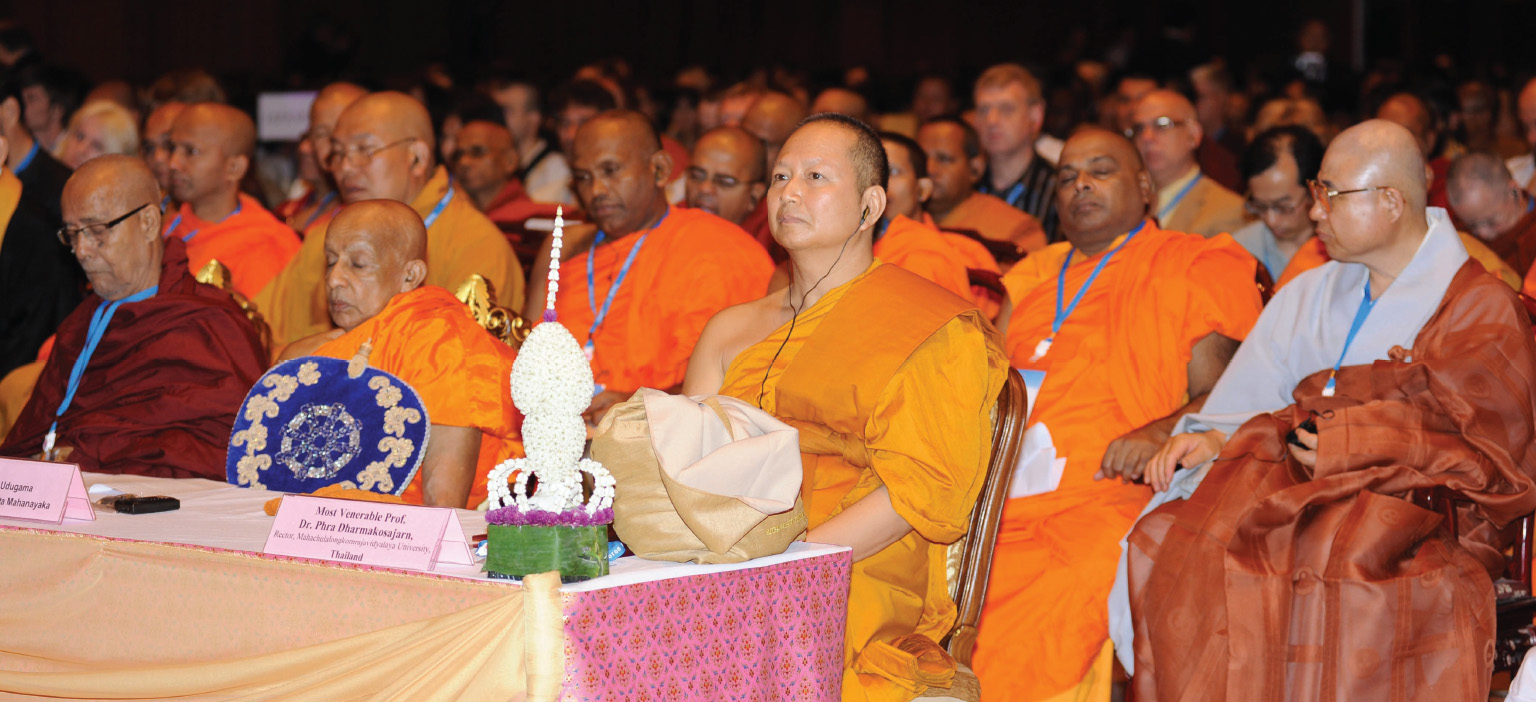 The participants from 83 countries unanimously adopted resolutions in the Bangkok Declaration:
- To reiterate once again the sheer impact of the man-made global banking and economic crisis on every community and nation and how a human’s states of mind influence his actions which in turn affect his environment; and to re-affirm our efforts towards filling the spiritual vacuum by emphasizing the natural law of inter-being that will help sustain the fragile global recovery;
- To encourage, as part of Buddhist contribution towards global recovery, the world community to introduce humanistic education in order to promote human dignity, security and social and economic solidarity on the one hand and on the other to minimize self-inflicted problems in the world; and to urge world religious and political leaders to strengthen ongoing dialogue in order to avoid mistrust and violence between different cultures;
- Considering that every big crisis starts out as a small crisis, the escalation of which is not inevitable if we manage to understand the causal chain of events which produces it, to develop peaceful social strategies based on the Middle Path in prevention, resolution and healing through non-violent and tolerant communication, participation and interdependence for harmonious existence;
- To promote mental and emotional welfare and wellbeing of mankind through moral ethics, meditation, self-evaluation, self-awareness and right view as well as to highlight the danger to the society of egoistic states of mind and the benefit of service to the wider society;
- To use socially engaged Buddhism in various fields as guided by the Dhamma as a tool in order to help relieve the impact of global economic crisis on individuals and communities;
- To promote awareness on the interlinkages between Buddhism, ecology and attitudes to nature; and to endorse a global “eco-Buddhist” network;
- To endorse the creation of World Buddhist Park by the World Buddhist Park Foundation in Prachin Buri Province, Thailand as a further development of the Centre of World Buddhism, as internationally endorsed in 2005/2548, at Buddhamonthon, Nakhon Pathom Province, Thailand;
- To continue promoting better understanding of Buddhist principles amongst the wider public by compiling and distributing widely a common Buddhist text, which will reflect the rich resources of the Theravada, Mahayana, and Vajrayana Buddhist traditions as well as the needs of today’s society;
- To continue supporting the ongoing electronic project for a Union Catalogue of Buddhist Texts, UCBT, which is currently being carried out by leading scholars from 23 universities and libraries from 16 nations, by hosting a seminar at Maha- chulalongkornrajavidyalaya University in September 2010;
- To hold the second conference of the International Association of Buddhist Universities, IABU, in December 2011/ 2554 under the theme of Buddhist Philosophy and Praxis at Mahachulalongkorn- rajavidyalaya University;
- To hold the 2011/2554 United Nations Day of Vesak at the Mahachulalongkorn- rajavidyalaya University Main Campus, Wang Noi, Ayutthaya, The United Nations Conference Centre, Bangkok and Buddhamonthon, Nakhompathom Province, Thailand, so celebrating the Auspicious Occasion of His Majesty King Bhumibol Adulyadej’s 84th Birthday Anniversary December 5, 2010.
