Conferences & Declaration summary
Conferences & Declaration summary
2016
The 13th United Nations Day of Vesak
(Thailand)
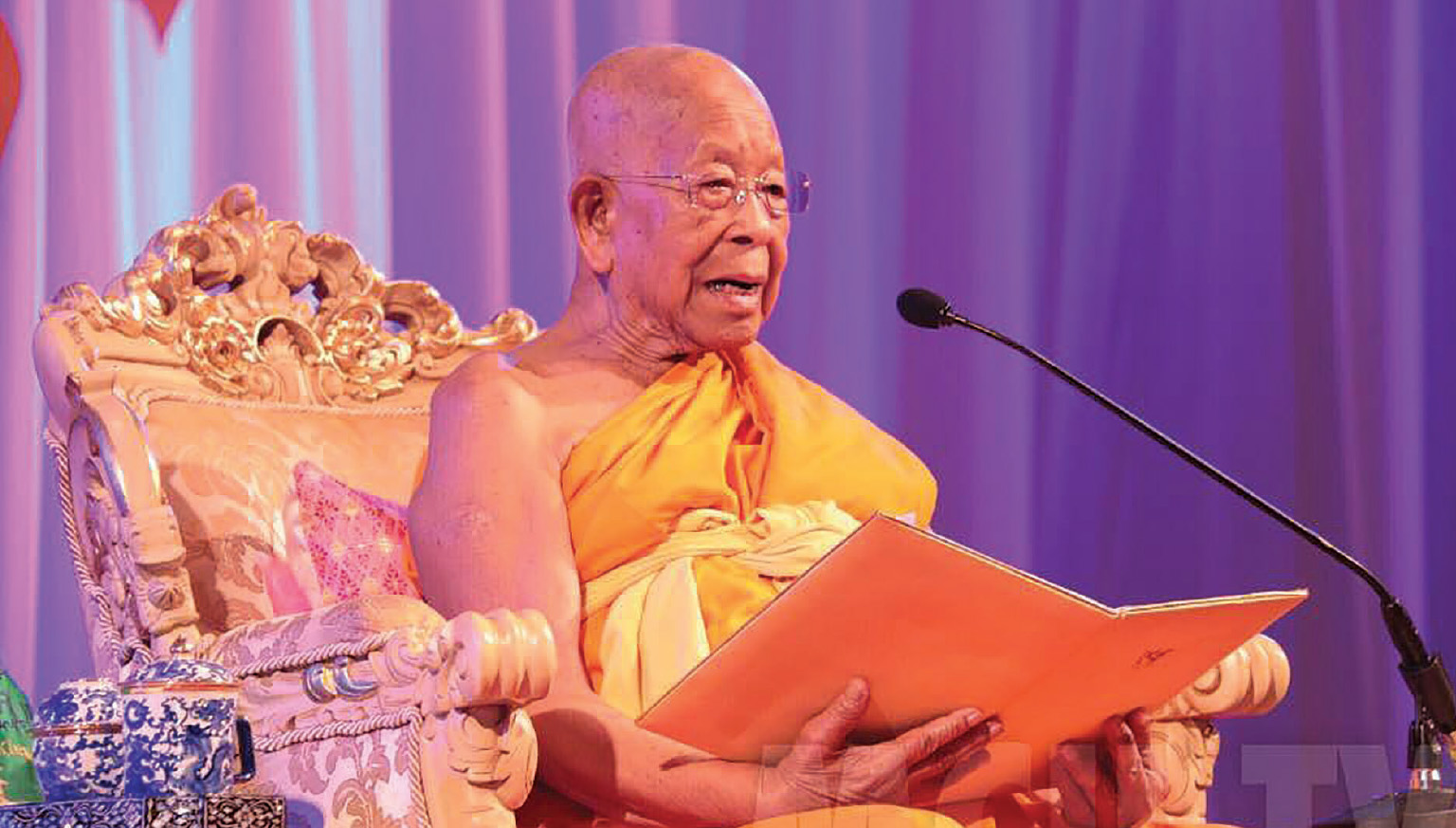 From May 22 to 23, 2016 (B.E. 2559), the 13th United Nations Day of Vesak celebration was held at Mahachulalongkornrajavidyalaya University in Ayutthaya Province, the ESCAP Hall at the United Nations Conference Centre in Bangkok, and Buddhamonthon in Nakhon Pathom, Thailand. The celebration was hosted by Mahachulalongkornrajavidyalaya University, overseen by the International Council for the Day of Vesak, with support from the Thai Government and blessings from the Supreme Sangha Council. Participants from 86 countries attended the celebration.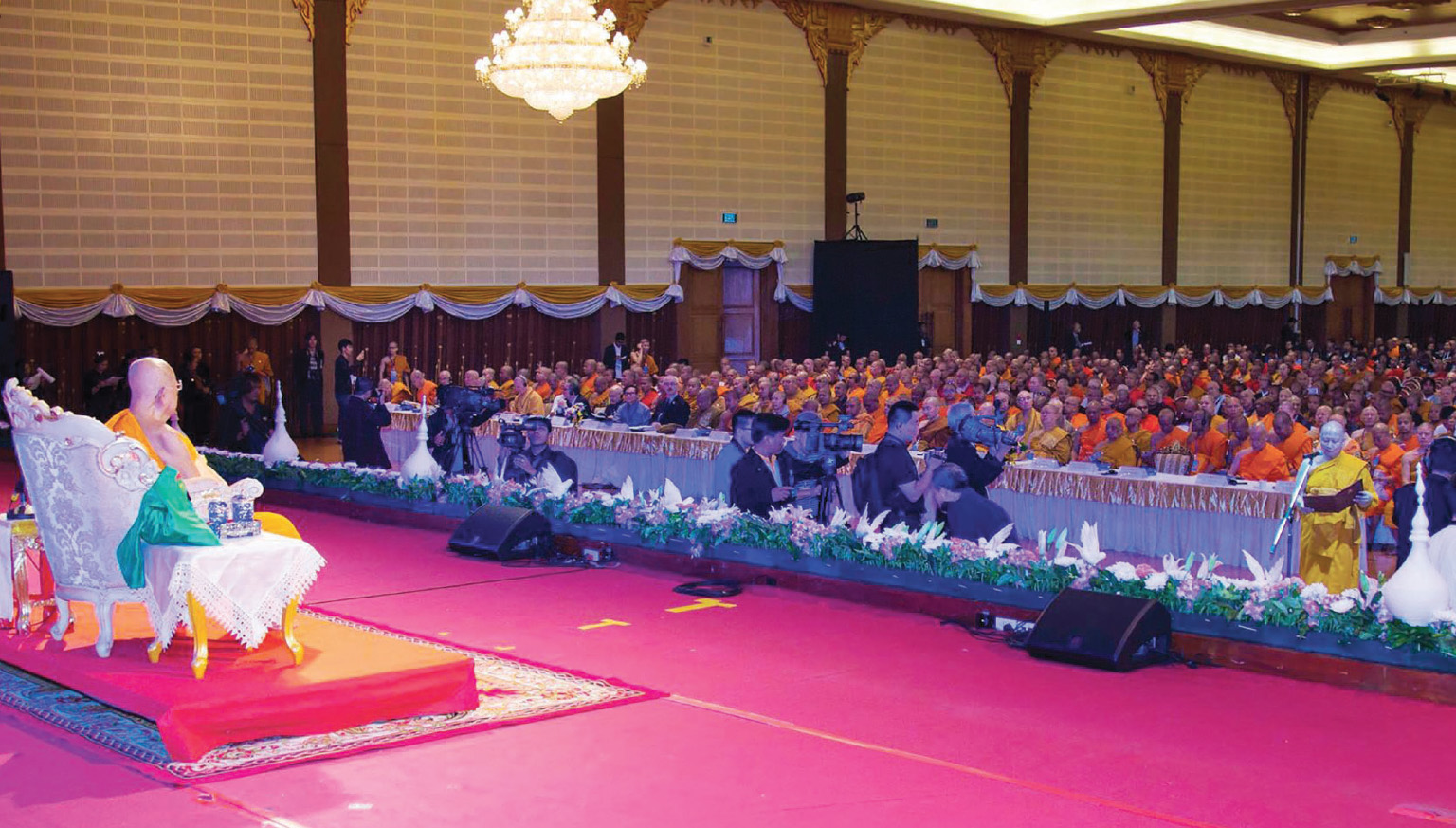
The event was held on the auspicious occasion of the 84th birthday of Her Majesty Queen Sirikit (now Her Majesty Queen Sirikit The Queen Mother). The celebration also marked the significant 70th anniversary of King Bhumibol Adulyadej’s accession to the throne.
The celebration had the privilege of welcoming numerous esteemed Buddhist dignitaries and leaders, including:
- H.H. Sangharaj Dharmasen Mahathero, President, Supreme Sangha Council of Bangladesh, Bangladesh
- H.H. Sanghanayaka Suddhananda Mahathero, Supreme Patriach, Bangladesh Bouddha Bhikkhu Mahasabha, Bangladesh
- Lyonpo Tshering Wangchuk, Chief Justice, Judiciary of Bhutan, Bhutan
- His Holiness Samdech Preah Agga Maha Sangharajadhipati Tep Vong, the Grand Supreme Patriarch of Mahanikaya in the Kingdom of Cambodia
- Most Ven. Pasonglielongzhuangmeng, Vice President of the Buddhist Association of China; Vice President of Yunnan Provincial Buddhist Association, China
- Most Ven. Shi Huiqing, Vice Secretary- General of the Buddhist Association of China; Vice President of Jiuhuashan Buddhist Association of Anhui Province, China
- Most Ven. Kakuhan Enami, Inner Trip Reiyukai International (ITRI), Japan
- Hiroshi Matsumoto, Inner Trip Reiyukai International (ITRI), Japan
- H.E. Dr. Dambajav Khamba Lama, Head Abbot of Zuun Khuree Dashichoiling Monastery, Mongolia
- Ven. Dr. Ashin Nyanissara, Chancellor of Buddhist Academy, and Sitagu University, Myanmar
- Most Ven. Bhikshu Jnanapurnik, President, Theravada Buddhist Academy, Nepal
- Hon. Dr. Wijeyadasa Rajapakshe, M.P., Ministry of Buddhasasana, Religious and Cultural Affairs, Sri Lanka
- Most Ven. Warakagoda Gnanaratana Thero, Mahanayaka Thero of Asgiriya Chapter, Sri Lanka
- Hon. Gamini Jayawickrama Perera, Minister of Wildlife and Forest Resources Conservation, Sri Lanka
- Hon. Pradeep Nilanga Dela Bandara ,D.N., Chief Custodian of Temple of the Tooth (Sri Dalada Maligawa)
- Most Ven. Thich Thien Tam, Vice President, VietnamBuddhist Sangha Executive Council, Vietnam
- Most Ven. Thich Thanh Nhieu, Standing Vice President, Vietnam Buddhist Sangha Executive Council, Vietnam
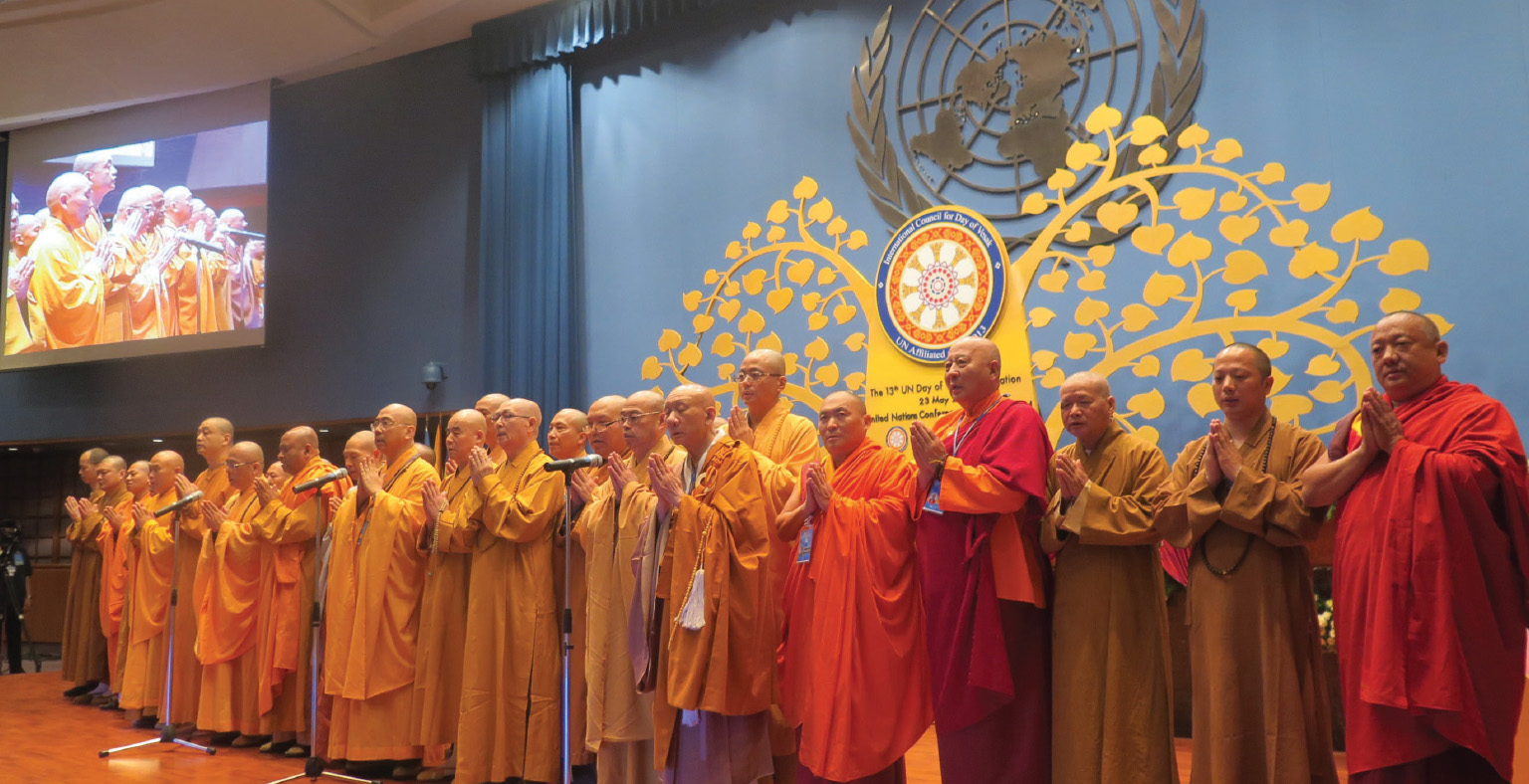
Panel discussions addressed two sub-themes:
Buddhist Education for Peace
The distinguished speakers for the panel discussions included:
- Prof. Francois Chenet, France
- Ven. Dr. Seck Kwang Phing, Singapore
- Assoc. Prof. Toshiichi Endo, Japan
- Most Ven. Jing Yi, Chinese Hong Kong
Buddhist Contributions to Environmental Responsibility for World Peace
The distinguished speakers for the panel discussions included:
- Prof. Dr. Padmasiri de Silva, Australia
- Dr. David Loy, USA
- Lawrence Tey Siong Chow, Malaysia
- Rev. Prof. (Dr.) Wijithapura Wimalaratana, Sri Lanka
- Prof. Il Chung Kim, Korea
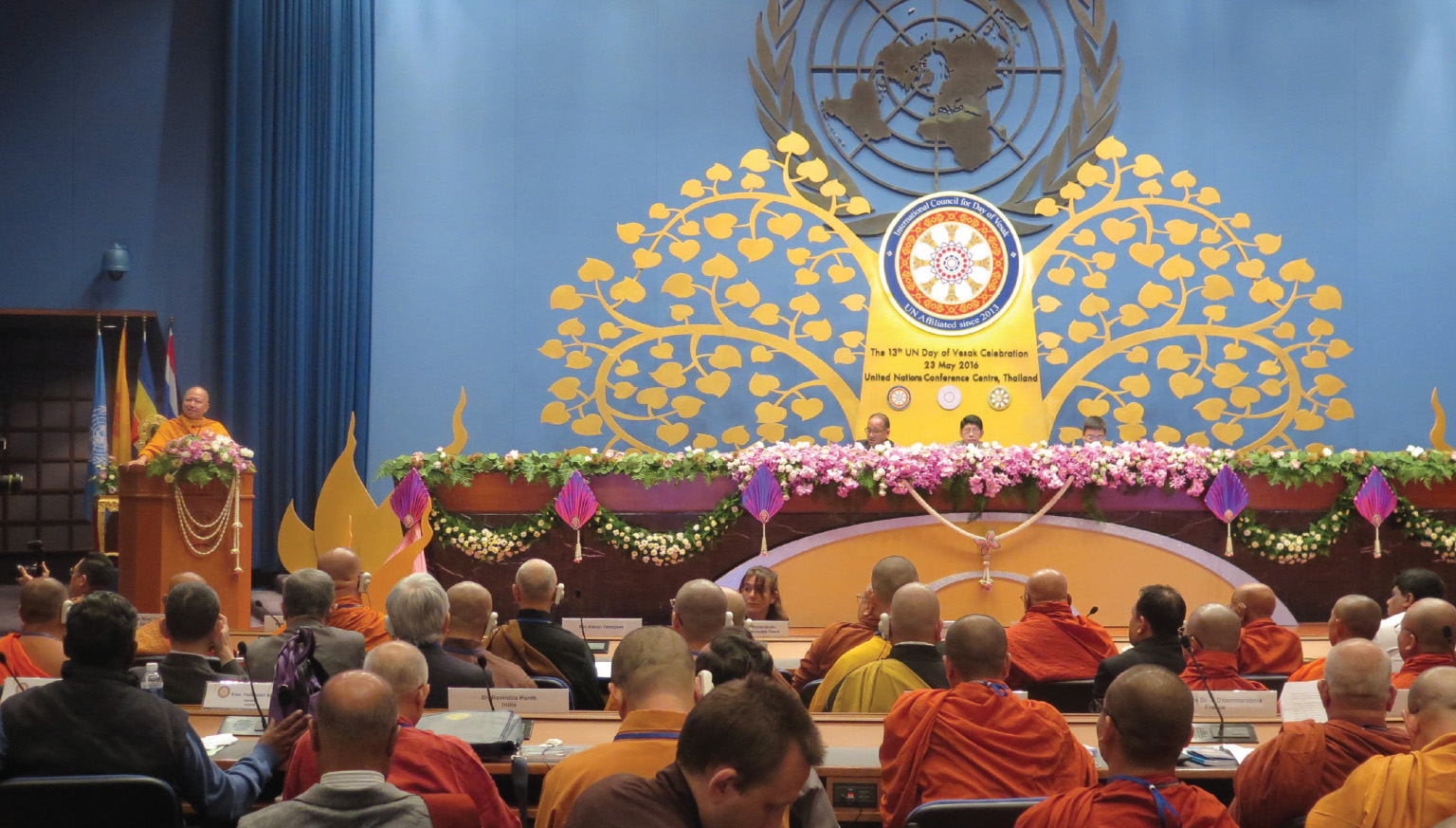 At the conclusion of the celebration, participants unanimously adopted resolutions in the Bangkok Declaration as follows:
- It was pointed out that the war is indeed a condition of mind, thus peace of the world cannot be registered without tracing the root causes of conflicts and violence in the mind of global citizen. Education was identified as a powerful means to help mankind move towards unity of man, global, economy, and citizenship. The participants discussed and agreed on a broad framework for a possible Buddhist strategy for world peace in general, and of the three main stages of peacebuilding, in particular prevention, conflict resolution, and rehabilitation were identified as key issues to be addressed. For the resolution of conflict, dialogue among involved parties is of vital and immediate task. Finally, if aggressive actions or even wars have taken place, concentration on rehabilitation ought to be at the centre of the efforts of the Buddhists.
- Based on the recommendation of the Executive Committee of the International Council for Day of Vesak (ICDV), participants agreed with the decision to make the printed version of the Common Buddhist Text (CBT) available to the general public, which have been examined and approved by three different panels of experts and Buddhist leaders.
- In discussing the issues related to the Buddhist path to peace, participants emphasized that one of the hallmarks of the Buddha’s teachings is the promotion of peace and non-violence. Buddhism has always stressed the path of peaceful resolution of disputes between individuals, communities, nations, and institutions. Excessive competition is to be avoided. Violence in all terms and manifestations is to be shunned. Therefore, Buddhism is synonymous with peace, because Buddhism firmly believes in the freedom of choice of the individual and cherishes the diversity of human thoughts and ideas. It rejects the imposition of ideas on others. Tolerance is thus a central tenet in Buddhism.
- The participants expressed their strong belief that the universal message of peace, goodwill, and compassion preached by Lord Buddha more than 2,600 years ago has never been more relevant than today. Mutual understanding, kindness to fellow human beings, and compassion are the hallmarks of Buddhist faith. The Buddha himself once said that there is no problem that cannot be resolved with the right understanding and the right effort. However, every problem instigates a complex that contains within itself the means for its own resolution. Buddhism preaches moderation, or the Middle Path, as the Buddhists call it. It is a way of life which seeks to avoidextremism. The sense of moderation serves as a foundation for actions of Buddhist towards others.
- Regarding the Buddhist contribution to developmental responsibility for world peace, it was recognized that the welfare of every living being, no matter how insignificant it may seem to us, is spiritually important and deserves our concern, embracing the whole biosphere and is not limited to our generation but extends to future generations as well.
- To further strengthen mutual understanding and collective development on the Buddhist path between Buddhist communities worldwide, the participants agreed to dedicate the Full Moon Day in May, recognized and observed by the UN Headquarters and Regional Offices, as the day of chanting of the Buddha words and meditation.
- The participants were unanimous in their support for the newly established global standard, which was adopted as part of the UN Framework Convention on Climate Change at the Cop-21 summit in Paris last December and has already been signed by 177 dignitaries and 17 parties.
- The participants acknowledge the generosity and crucial role played by the Kingdom of Thailand in hosting the United Nations Day of Vesak over so many years, and approved and support the Democratic Socialist Republic of Sri Lanka to host the next 14th Anniversary Celebration of the United Nations day of Vesak 2017.
