Conferences & Declaration summary
Conferences & Declaration summary
2018
The 15th United Nations Day of Vesak
(Thailand)
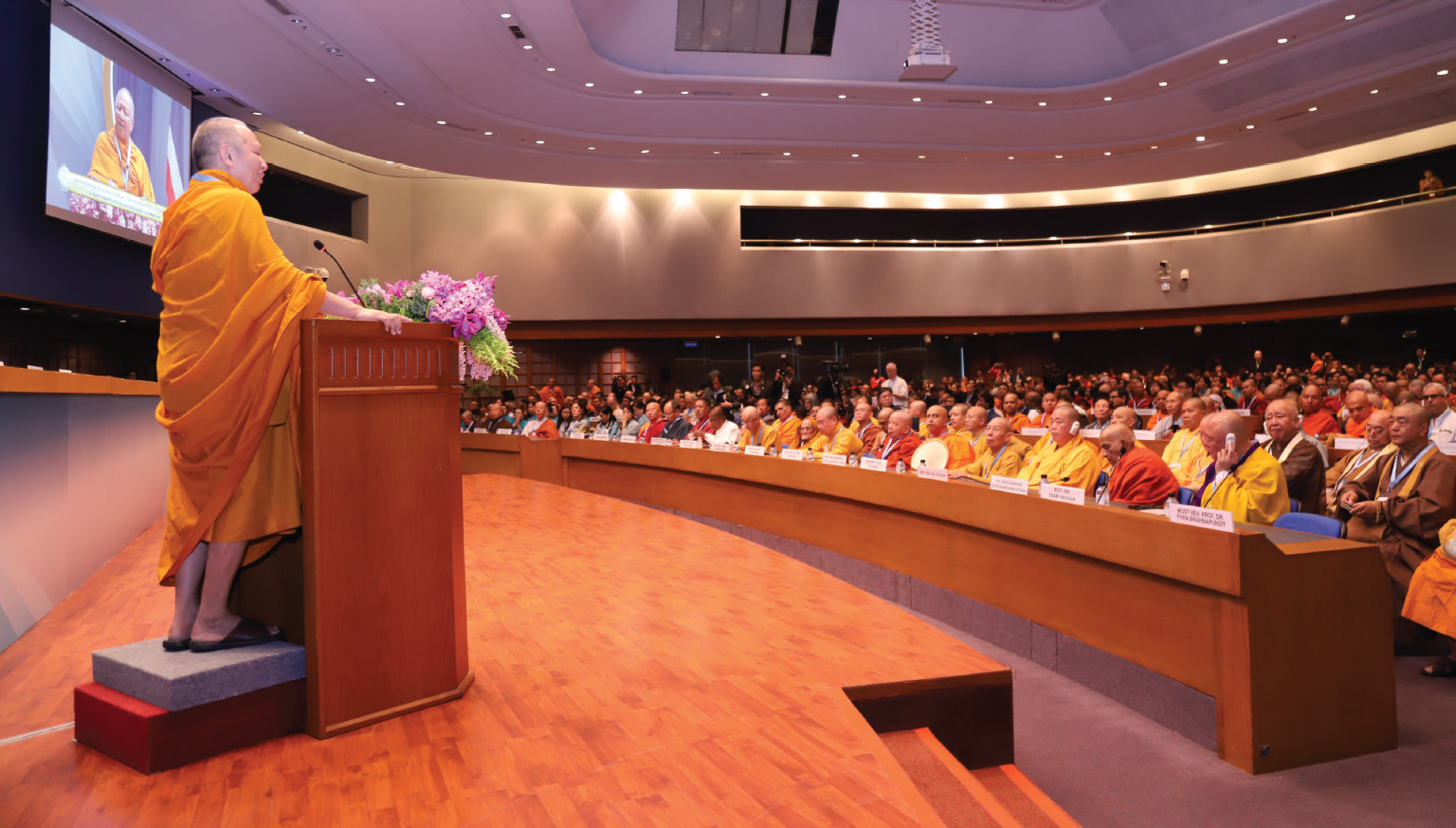
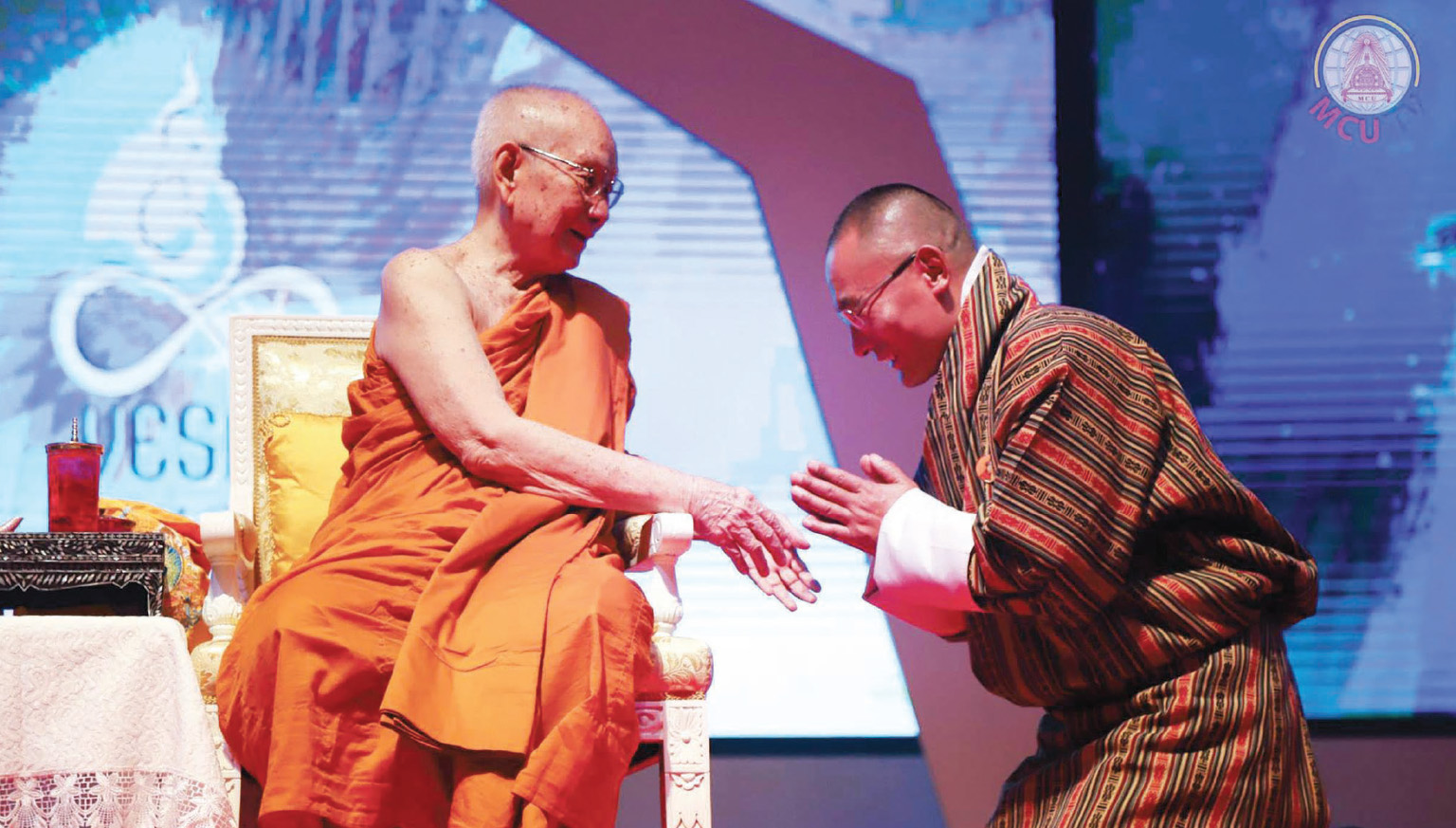 From May 25 to 27, 2018 (B.E. 2561), the 15th United Nations Day of Vesak celebration was held at Mahachulalongkornrajavidyalaya University in Ayutthaya Province, the ESCAP Hall at the United Nations Conference Centre in Bangkok, and Buddhamonthon in Nakhon Pathom, Thailand. The celebration was hosted by Mahachulalongkorn rajavidyalaya University, overseen by the International Council for the Day of Vesak, with support from the Thai Government and blessings from the Supreme Sangha Council. The event drew 2,500 participants from 86 countries and regions.
 His Majesty King Maha Vajiralongkorn Phra Vajiraklaochaoyuhua, graciously appointed H.E. General Bundit Malaiarisoon to preside over the Opening Ceremony at the United Nations in Bangkok. From the Sangha side, Somdet Phra Ariyavangsa- gatayana, the Supreme Patriarch of Thailand, attended the celebration to deliver the inaugural speech and offer blessings to all participants at Maha- chulalongkornrajavidyalaya University.
The celebration was held to express deep respect for the Sufficiency Economy Philosophy developed by His Majesty King Bhumibol Adulyadej, who received the first United Nations Development Programme Human Development Lifetime Achievement Award in recognition of his works. The celebration had the honor of welcoming the Honorable Prime Minister of Bhutan, H.E. Dasho Tshering Tobgay, who delivered the keynote address on the main theme,
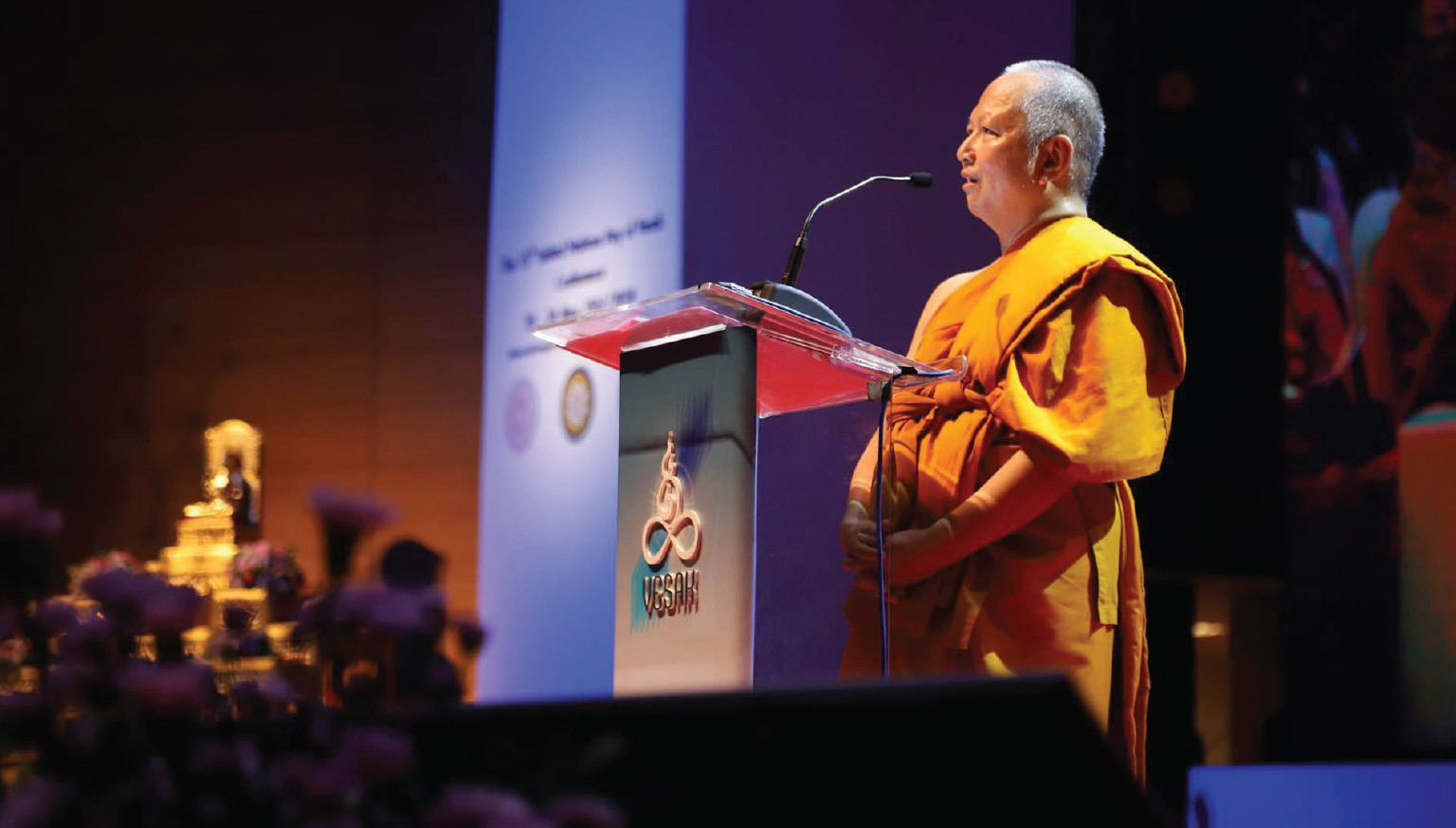
“The Buddhist Contribution to Human Development.”
The panel discussions focused on four key sub-themes:
The Buddhist Contribution to Human Development
This session featured the following panelists:
- Ms. Dechen Tsering, Bhutan
- Dr. Michael Vermeulen, Belgium
- Prof. Dr. Wasantha Priyadarshana, Sri Lanka
- Prof. Dr. Frank Hoffman, USA
- Ven. Phra Rajapariyattkavi, Thailand
Empowering Youth through Buddhist Education
This session featured the following panelists:
- Most Ven. Dr. Seck Kwang Phing, Singapore
- Ven. Assoc. Prof. Dr Hansa Dhammahaso, Thailand
- Ven. Kuppiyawatteh Bodhananda Thero, Sri Lanka
- Prof. Dr. Arvind Singh, India
- Kevin Chin, Malaysia
- Zilong Wang, China
Engaged Buddhism for Social Welfare
This session featured the following panelists:
- Ven. Prof. Dr. Jing Yin, Chinese Hong Kong
- Ven. Ban Ruo Shi, Australia
- Ven. Yatirawana Wimala, Kenya
- Ven. Prof. Dr. Chongdok, Korea
- Dr. Podi Appuhamy Kiriwandeniya, Sri Lanka
- Acarya Judith Lief, USA
Preserving Cultural Identities in an Interconnected World
This session featured the following panelists:
- H.E. Vira Rojpojchanarat, Thailand
- Prof. Dr. Jundo Nagashima, Japan
- Ms. Wilis Rengganiasih Endah Ekowati, Indonesia
- Prof. Dr. Nguyen Thi Huong, Vietnam
- Prof. Dr. Pataraporn Sirikanchana, Thailand
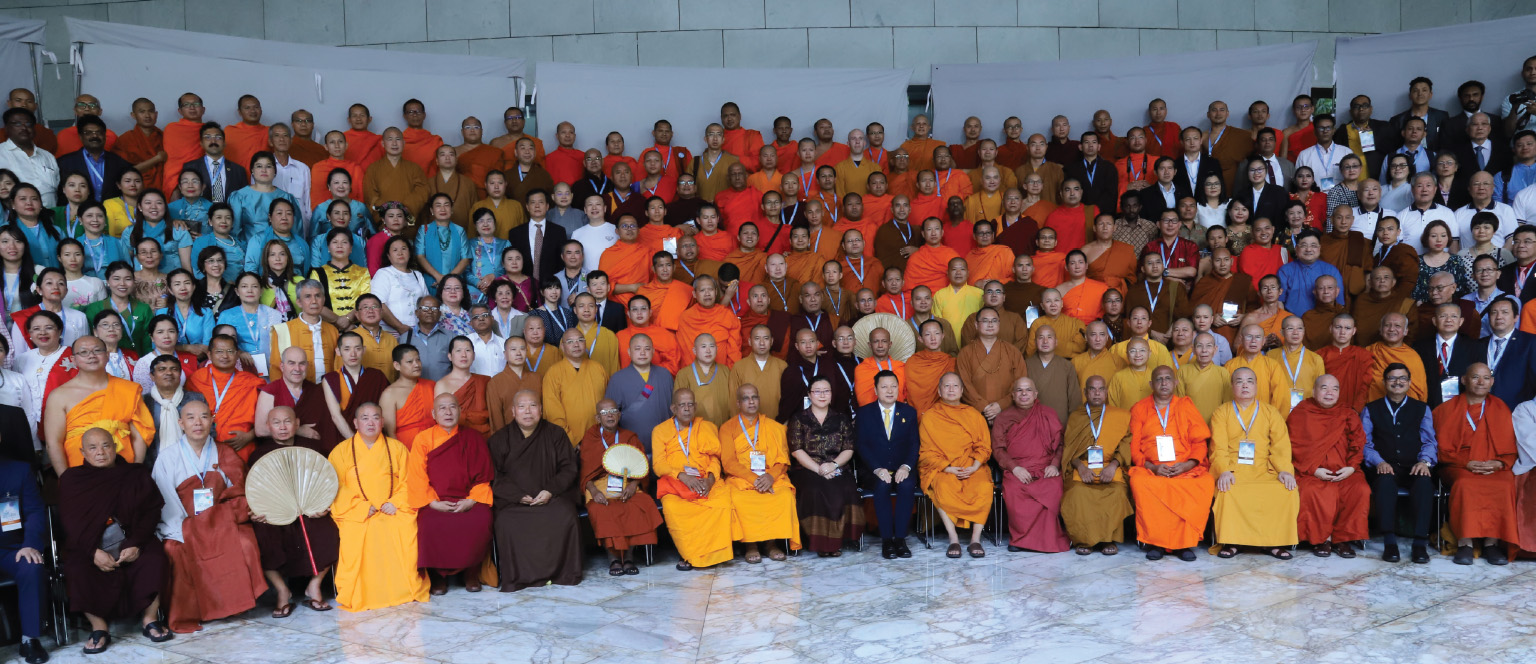 The celebration had the privilege of welcoming numerous esteemed Buddhist dignitaries and leaders, including:
- His Holiness Sanghanayaka Suddhananda Mahathero, Supreme Patriarch of Mahanikaya in Bangladesh
- His Excellency Lyonchhen Tshering Tobgay, the Honorable Prime Minister of the Kingdom of Bhutan
- His Eminence Tsulag Lopen Samten Dorji, Deputy Sangharaja of Bhutan and Padma Acharya of the Central Monastic Body
- His Holiness Samdech Preah Agga Maha Sangharajadhipati Tep Vong, the Grand Supreme Patriarch of Mahanikaya in the Kingdom of Cambodia
- His Holiness Samdech Preah Abhisiri Sugandha Mahasangharaja Dhipati Kitti Uddesa Pandita Bour Kry, the Great Supreme Patriarch of Dhammayuttikanikaya in the Kingdom of Cambodia
- Most Ven. Phramaha Ngon Damlongbun
- Most Ven. Warakagoda Nghanaratana Mahanayaka Thero, Mahanayaka of Asgiri Mahaviharaya
- Most Ven. Napana Premasiri Thera, Mahanayaka of the Ramanna Nikaya chapter
- Most Ven. Kotugoda Dhammawasa Thera, Mahanayaka of the Amarapura Nikaya chapter
- Most Ven. Prof. Thich Tri Quang, Supreme Patriarch of the Patronage Council of the Vietnam Buddhist Sangha
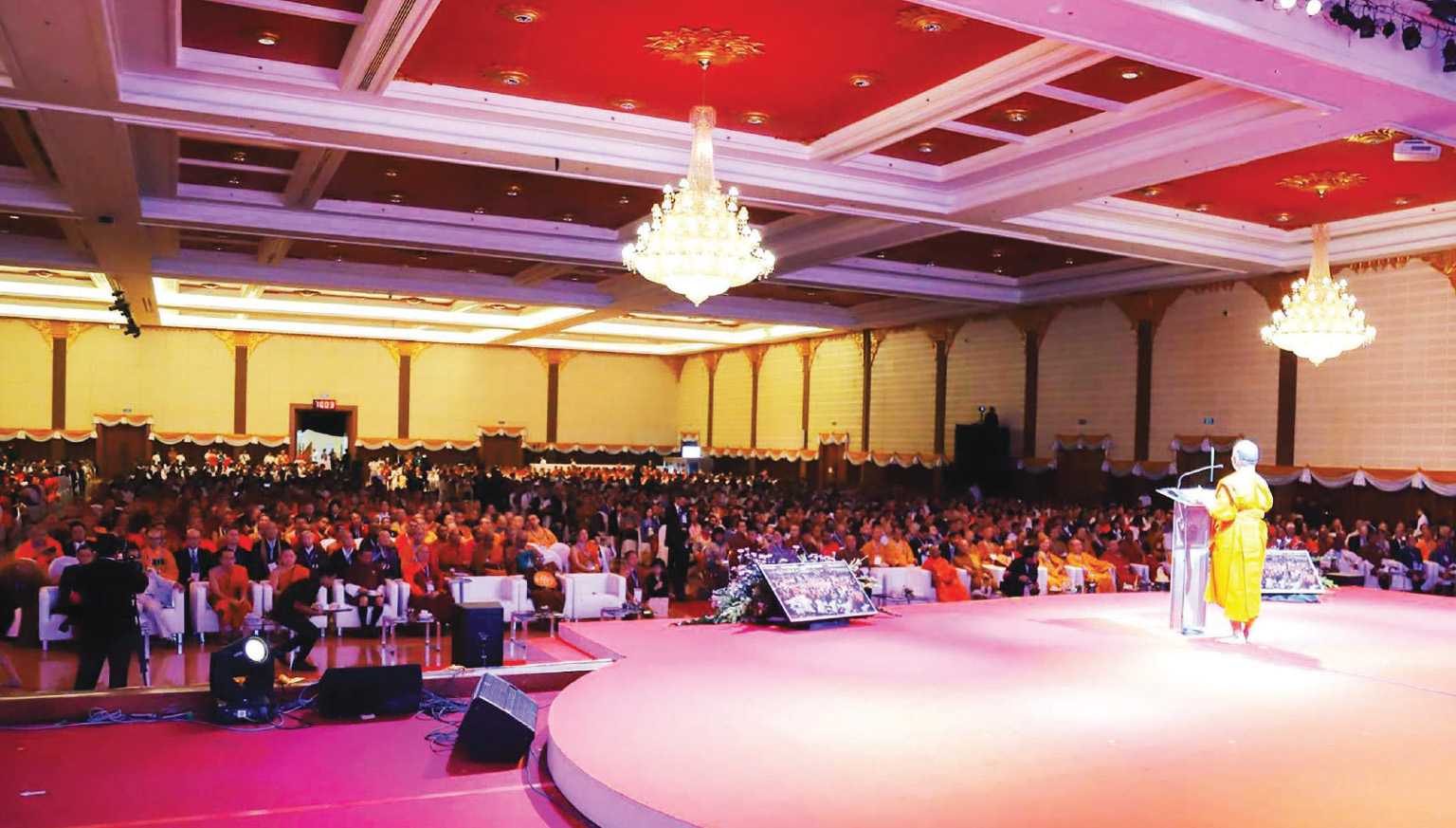
At the conclusion of the celebration, participants unanimously adopted resolutions in the Bangkok Declaration.
- To affirm that in keeping with the Buddhist worldview, it is an obligation to work tirelessly to achieve the UN Sustainable Development Goals (SDGs).
- To record our appreciation for the great success of the 14th United Nations Day of Vesak held in Colombo and Kandy, Sri Lanka in 2017.
- To applaud Mahachulalongkornrajavidyalaya University for the publication of the second edition of the Common Buddhist Text (CBT) and the first Thai translation edition.
- To rejoice in the former agreement made with Mahachulalongkornrajavidyalaya University to translate the Common Buddhist Text (CBT) into Chinese, Hungarian, Indonesian, Japanese, Portuguese, Spanish, and Vietnamese, that were signed during the celebration.
- To recognize the progress made in launching the Union Catalog of Buddhist Texts to put the MCU edition of the Pali Canon online, with the longer-term goal of adding all other Buddhist canons.
- To express our deep admiration for the Sufficiency Economy Philosophy developed by the late King of Thailand, His Majesty King Bhumibol Adulyadej, which is based on the middle path that consists of three components: moderation, reasonableness, and resilience. To express our deep admiration for the well-known concept of Gross National Happiness (GNH), developed by His Majesty King Jigme Singye Wangchuck of the Kingdom of Bhutan, which is measured by psychological well-being, community’s mentality, cultural and ecological diversity, resilience, health education, good governance, and living standard.
- To promote human development based on the insights and the proposals of specialists from around the world, organized in four panels, namely Buddhist Contribution to Human Development, Empowering Youth through Buddhist Education, Engaged Buddhism for Social Welfare, and Preserving Cultural Identities in an Interconnected World.
The usual approach in economically developed societies, which reduces human development only to the improvement of living standards, healthcare and education cannot be neglected. The full range of factor must be promoted, including the ecological, social, and cultural dimensions. We therefore need to focus on ecological diversity and resilience, and enhance community mentality and sympathetic connection for others. It is also vital to build bridges between generations, especially to give space to the youth to find their own creativity to live in the Dhamma.
Panel 1: Buddhist Contribution to Human Development
- To encourage an understanding of the interconnectedness of inner development and outer environmental sustainability.
- To urge religious leaders and their communities to make a commitment to the responsible youth of resources.
- To create a community of compassionate togetherness in order to address the disconnectedness and inequality that societies create, which harm both the privileged and the disadvantaged.
- To creatively apply Buddhist principles and contemplative practices for behavioral and spiritual transformation, such as, in chaplaincy services.
Panel 2: Empowering Youth through Buddhist Education
- To employ Buddhist teachings, such as virtue living, generosity, knowledge of beings and the world, having trust in human goodness and wisdom to solve the challenges facing youth.
- To reaffirm the best Buddhist education is to live the Dhamma. We can best empower young people by inspiring and supporting to find creative ways to integrate Dhamma into their own lives.
- To promote mindfulness among children and young monastics as a useful starting point for a peaceful society.
Panel 3: Engaged Buddhism for Social Welfare
- To innovatively adapt the principles of socially engaged Buddhism to contemporary social problems and in secular contexts, such as in the counseling and psychotherapy of addicts and in hospices, in order to transform violence into non-violence, greed into contentment, and confusion into understanding.
Panel 4: Preserving Cultural Identities in an Interconnected World
- In support of promoting mutual respect among cultural identities, we will promote a culture of knowledge, mutual understanding, and enlightenment based on universal values and an understanding of the law of interdependence in relation to cultural identities.
- To cultivate an understanding of the formation and transformation of personal and collective identities that promotes inner harmony with the diversity of these identities.

