For two decades, from 2004 to 2024, Buddhists worldwide have come together to commemorate the United Nations Day of Vesak, an observance that has gained global recognition. This event not only honors the Buddha’s Birth, Enlightenment, and Passing but also fulfills the resolution adopted by the United Nations General Assembly during its 54
th session (Resolution 174) on December 13, 1999, which officially designated Vesak Day as an international observance. The United Nations Day of Vesak serves as a significant gathering for the Supreme Patriarchs, Mahanayakas, Buddhist leaders, and scholars of Buddhism from various countries and regions. The celebration promotes unity, harmony, and collaboration in disseminating the teachings of Buddhism, while adhering to the Tipitaka based on the respective traditions. Since its inception in 2004, the observance of the United Nations Day of Vesak has grown considerably in both scope and participation, with over 80 countries and regions now involved in this annual event. Thailand, Vietnam, and Sri Lanka, with the support of their respective governments, Sangha, and the general public, have taken turn in hosting this important celebration.
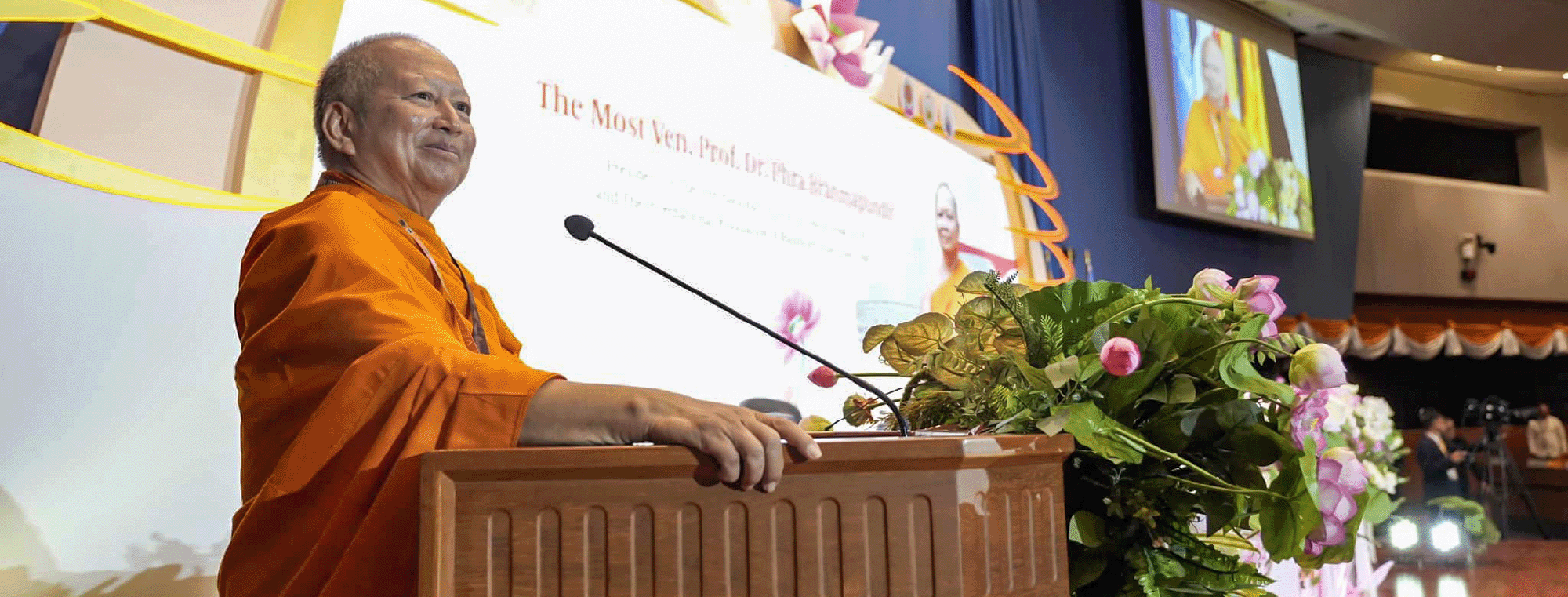
As the President of the International Council for the Day of Vesak (ICDV), I am honored to introduce this book, which provides an account of the history and development of United Nations Day of Vesak celebrations. The book also highlights the pivotal role of the ICDV, which holds special consultative status with the United Nations Economic and Social Council. Included within are photographs from each year, offering insight into the atmosphere of the celebrations, the prominent Buddhist leaders in attendance, the academic seminars and the scholars who participated, the resolutions adopted by the Buddhist community in the form of declarations, and the various projects launched as a result of the United Nations Day of Vesak celebrations.
This website would not have come to fruition without the unwavering commitment, diligence, and dedication of all those involved. I extend my sincerest gratitude to the Supreme Sangha Council, the Government of Thailand, the National Dissemination of Buddhism Committee, the International Council for the Day of Vesak Committee, and Maha- chulalongkornrajavidyalaya University for their steadfast contributions. My heartfelt appreciation goes to the Sirivadhanabhakdi Foundation and Thai Beverage Public Company Limited for their generous and invaluable support that made the publication of this book possible. I am also grateful to the many donors, sponsors, and volunteers who have contributed to promoting and upholding the values and significance of the United Nations Day of Vesak.